Old Man and Daughter

Two photographs, taken years apart, in places that had nothing to do with each other. One was a quiet black-and-white shot from a workshop — a father in his element, tools within reach. The other was a candid from a family party, his daughter mid-laugh, caught off guard.

They had never been photographed together like this. William studied the light, the way each of them held themselves, and built a scene that never existed as a photograph — but feels, now, like the truest one in the house: her hand on his shoulder, his hand over hers, a quiet conversation between two people who trust each other completely.

Photography can only record what a camera happened to catch. This is what the family actually remembers.
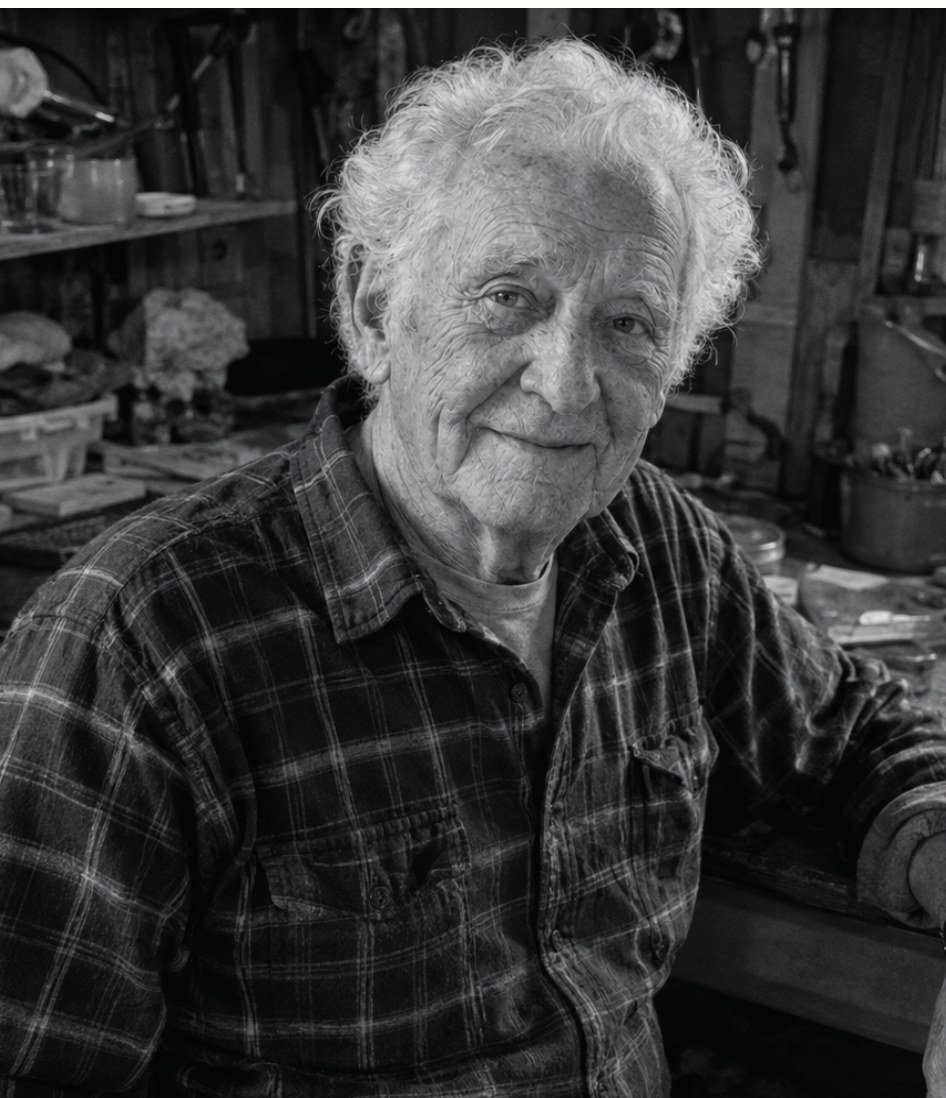
Black-and-white workshop photo of the father, taken years before the final painting

Workshop photo, taken years earlier

Candid party photo of the daughter, taken in a completely different setting

Candid party photo, unrelated setting
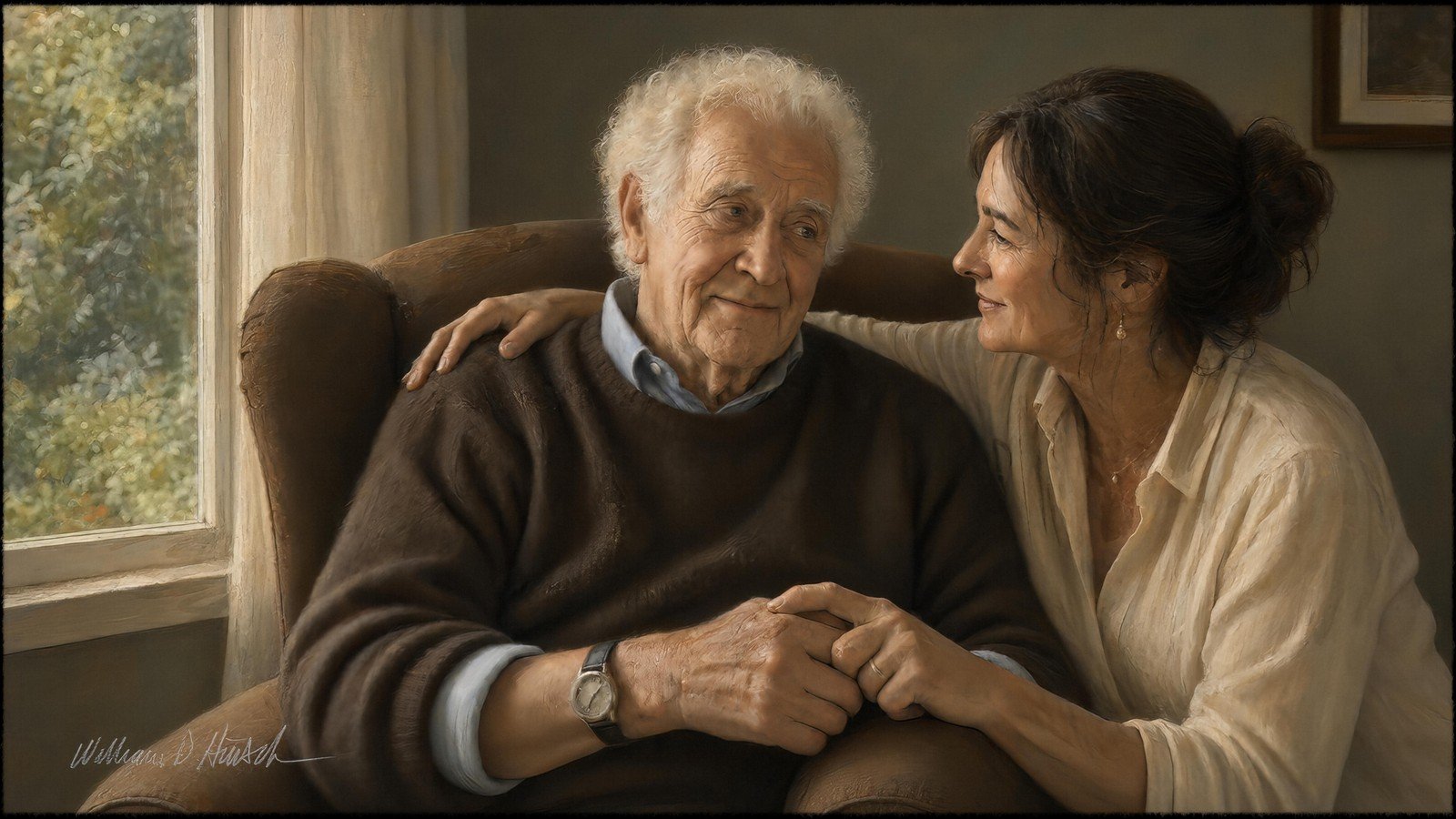
Old Man and Daughter, final painting combining two separate reference photographs into one scene

The final painting — a moment that was assembled from two photographs, never captured on camera
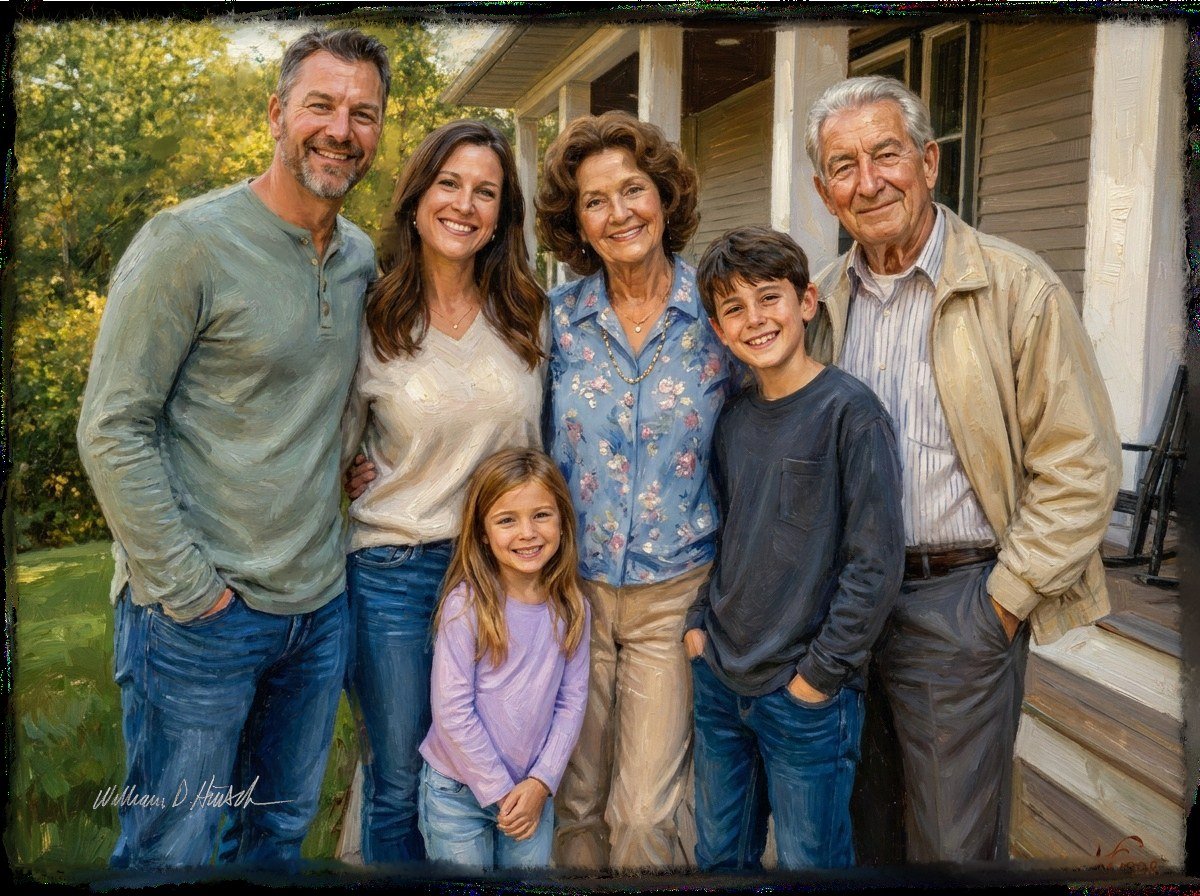
A Family, Whole Again

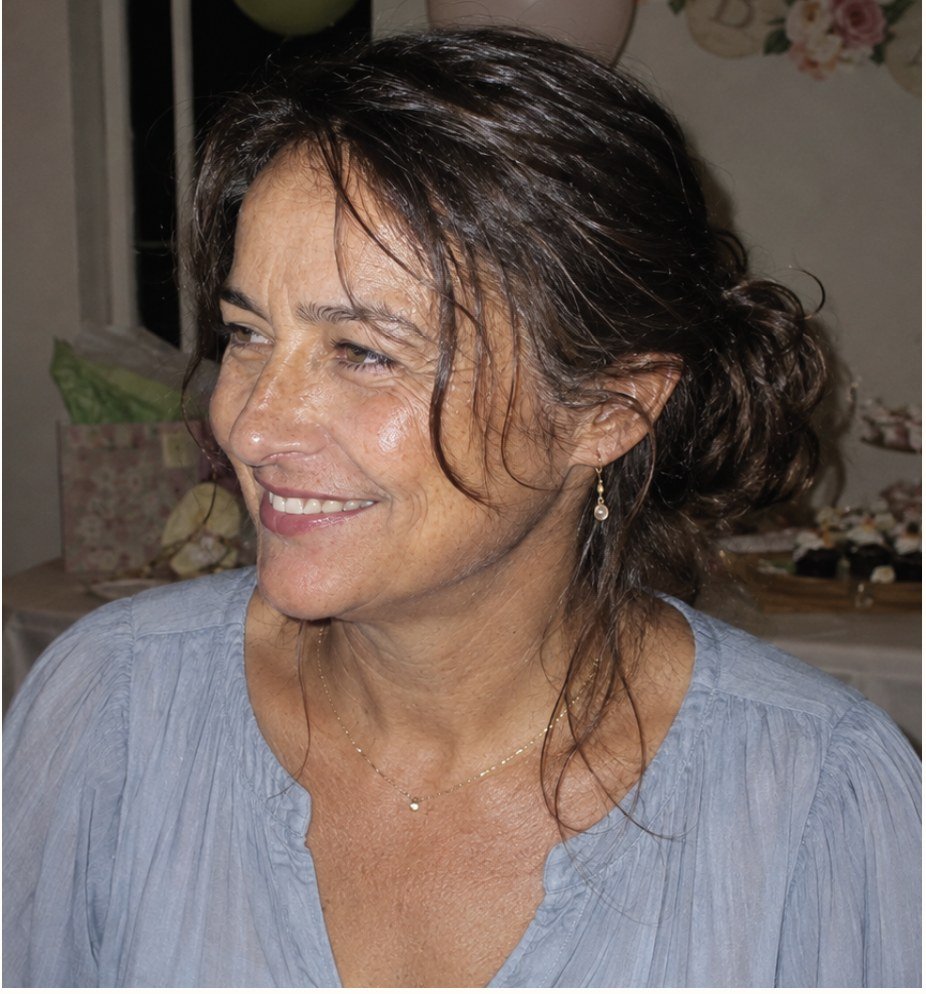
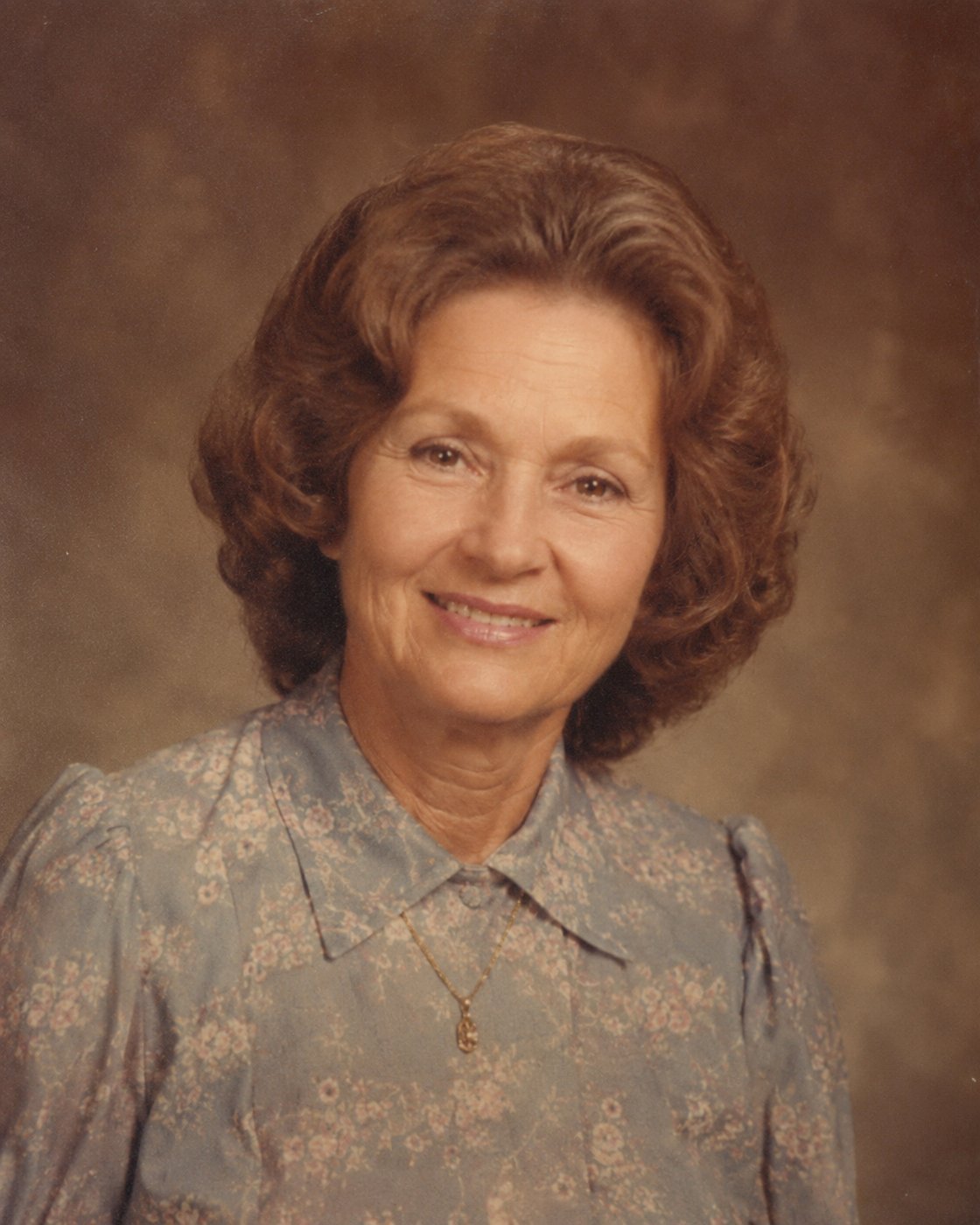
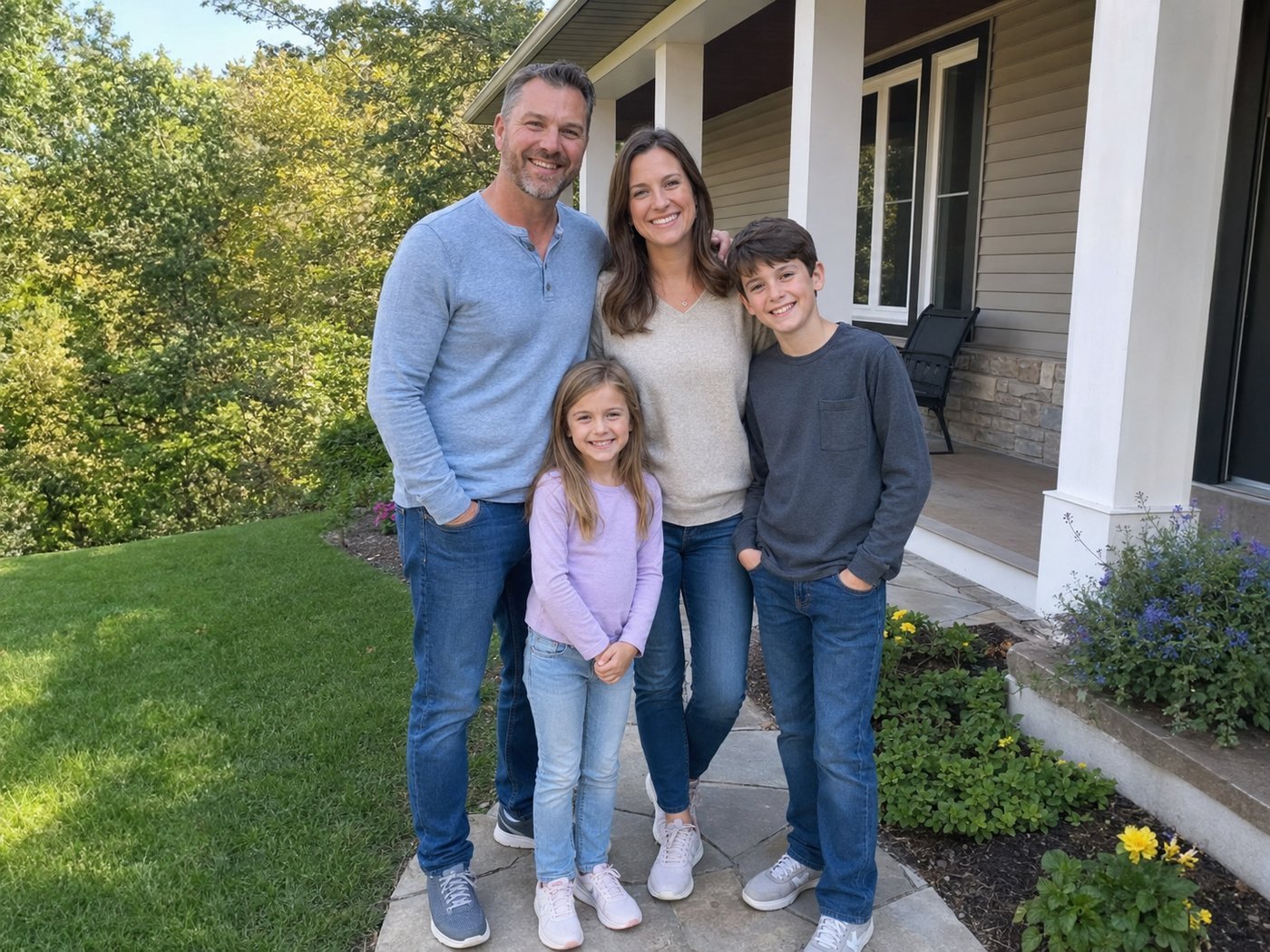
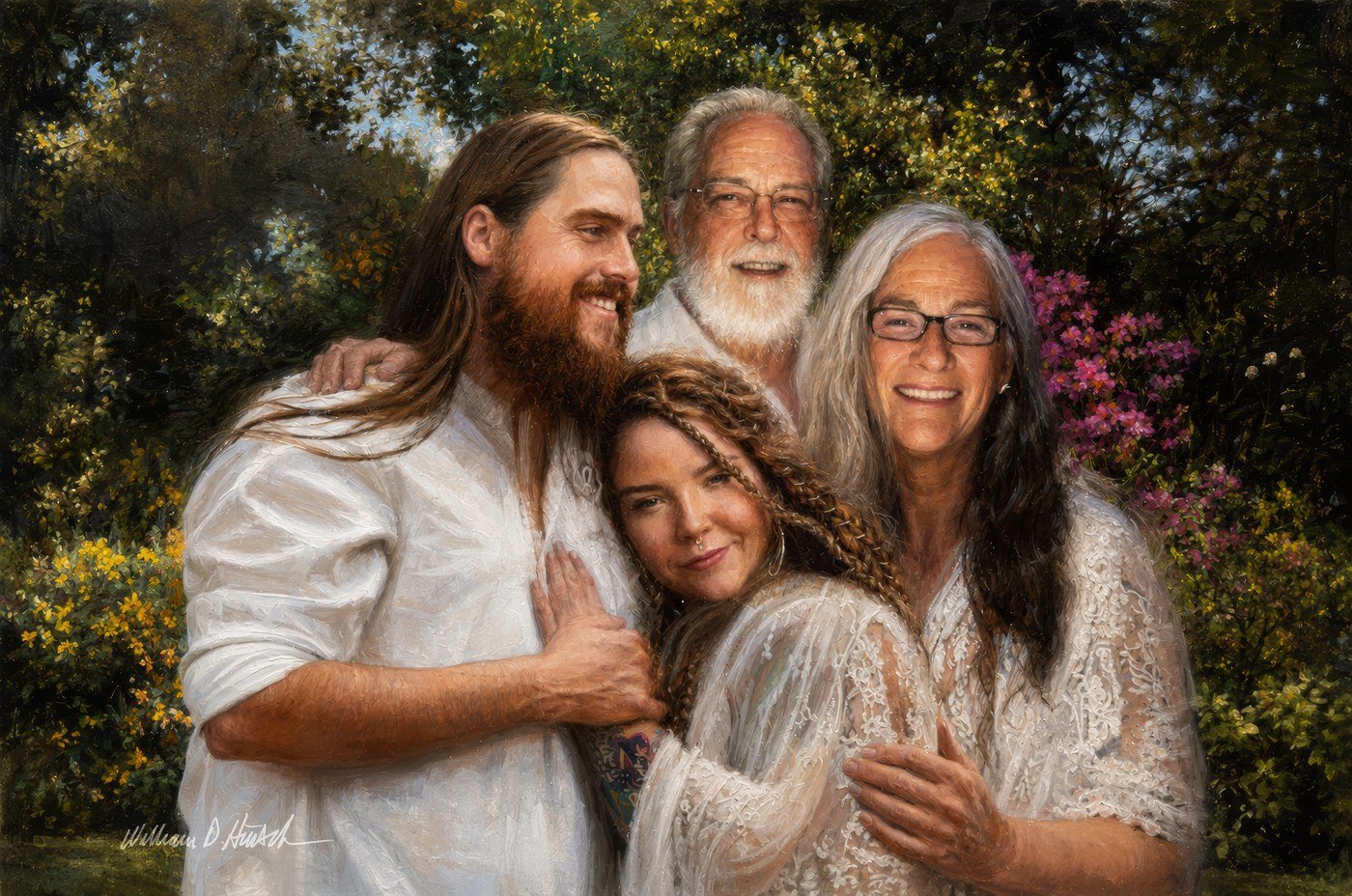
The family sent William three things: a recent photo of themselves on the front porch, and two individual photographs of grandparents who had passed — taken in different decades, in different houses, in different light entirely. There was no photo of all six of them together. There never could be.

William matched the light, the angle, the porch itself, and placed grandmother and grandfather back among the family they loved — not as a memory pasted in, but as if they'd simply stepped into frame a moment before the shutter clicked.

When the painting arrived, the family didn't talk about brushwork or technique. They just said, quietly, "That's them. That's exactly them."

Individual reference photo of the grandfather, taken decades earlier

Grandfather, individual photo

Individual reference photo of the grandmother, taken decades earlier

Grandmother, individual photo

Recent photo of the living family of four on their front porch

The living family, present day

The final painting, all six family members together on the porch for the first time

The final painting — all six, together, for the first time

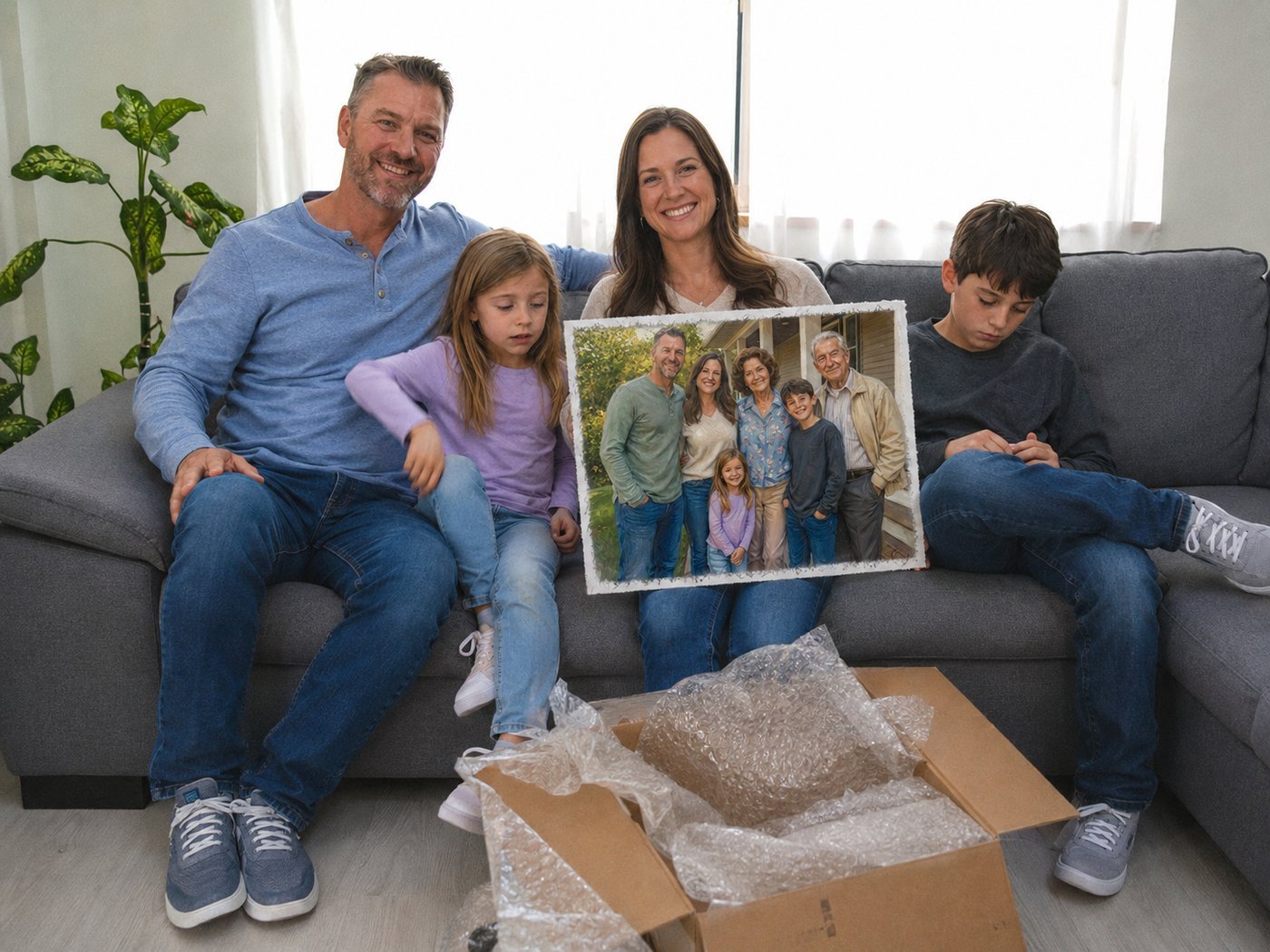
The family opening and seeing their finished memorial painting for the first time

The family, seeing the finished painting for the first time

Fran Anderson

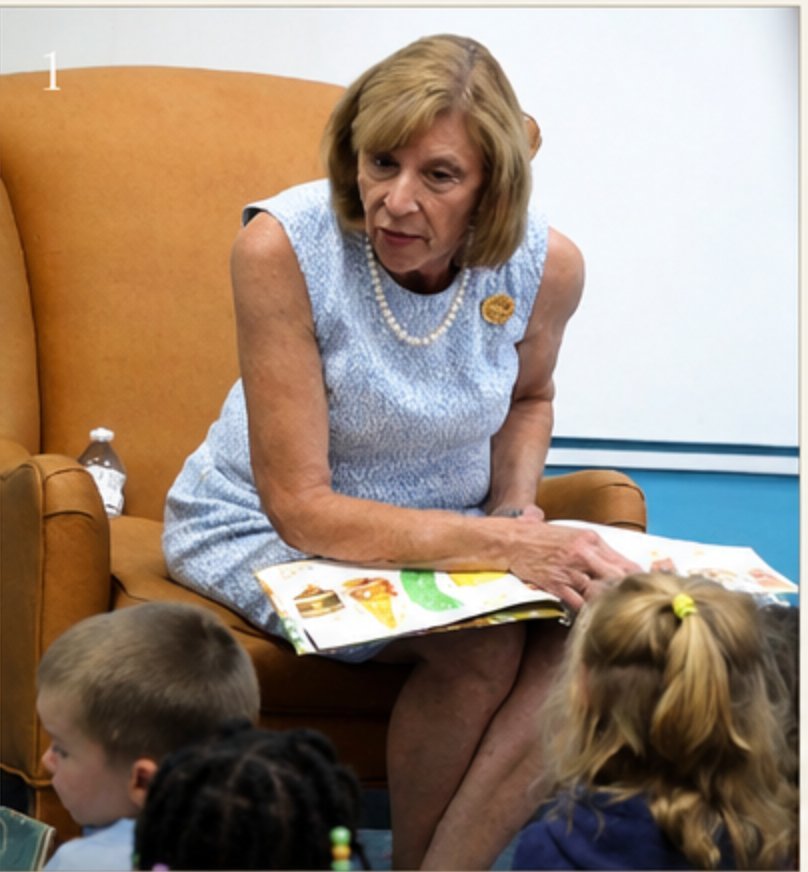
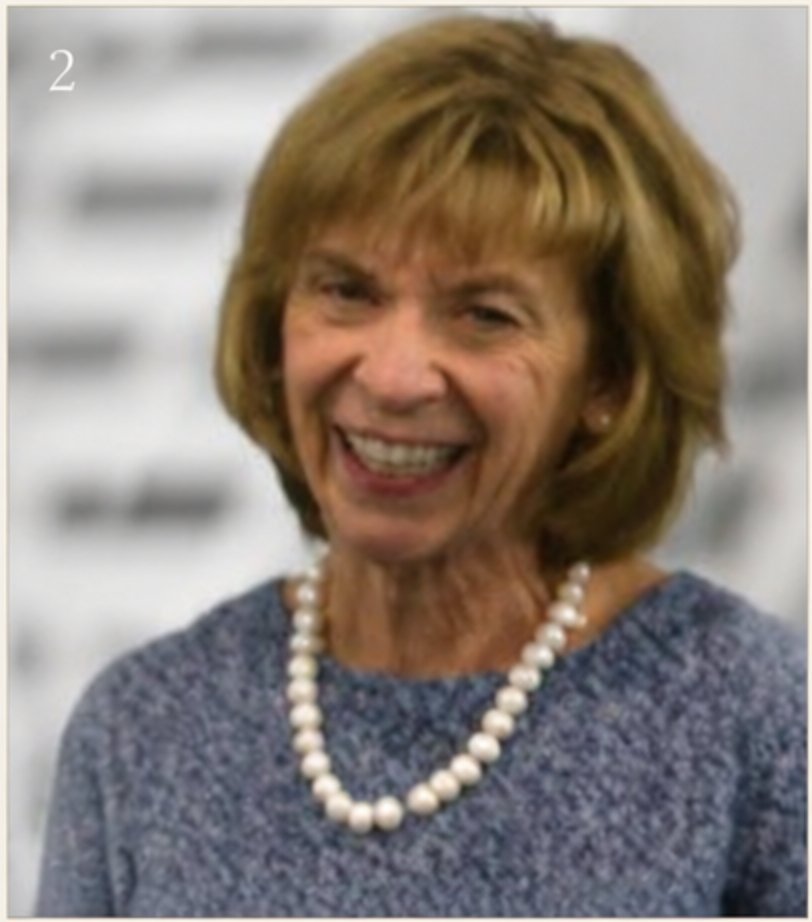
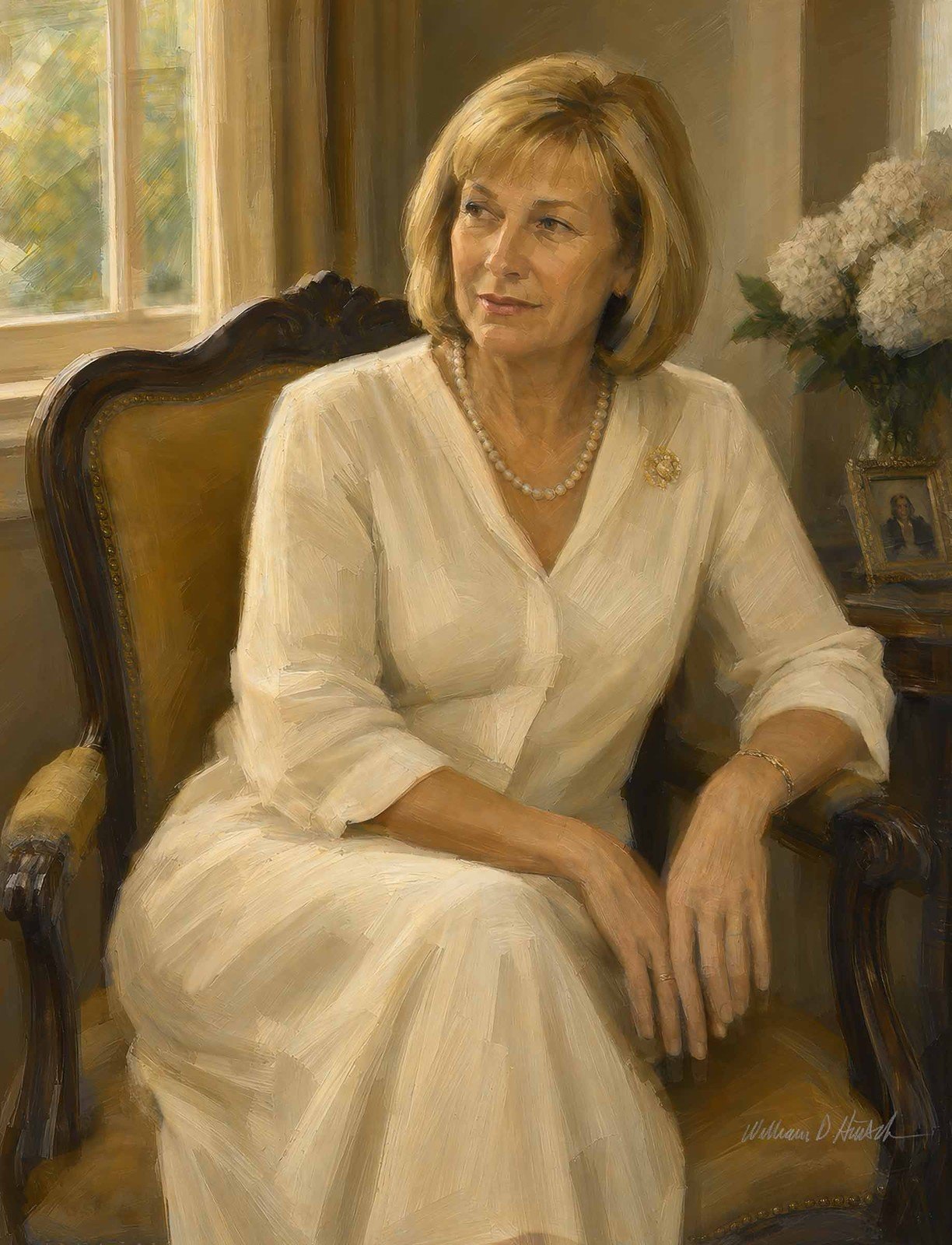
No single photograph of her felt right. The family sent William nine candid references — some blurry, some mid-laugh, none in the outfit or the setting they wanted for the final piece. That's not unusual. The photo that best captures a smile is rarely the photo with the best light, the best pose, or the best surroundings.

William's job wasn't to pick the best photo. It was to find her across all nine — the particular way her eyes creased, the set of her mouth — and paint the version of her that every one of those photos was reaching toward, in a formal setting none of the originals ever captured.

"That's exactly her" is the moment every family is hoping for. It rarely comes from a single photograph. It comes from all of them at once.

Candid reference photo of the subject reading to children

One of nine candid references

Candid reference photo of the subject smiling

Another reference, different setting entirely

The final painting, a formal portrait built from nine separate reference photographs

The final painting — built from all nine, in a setting none of them showed

Sana on Karachi Beach

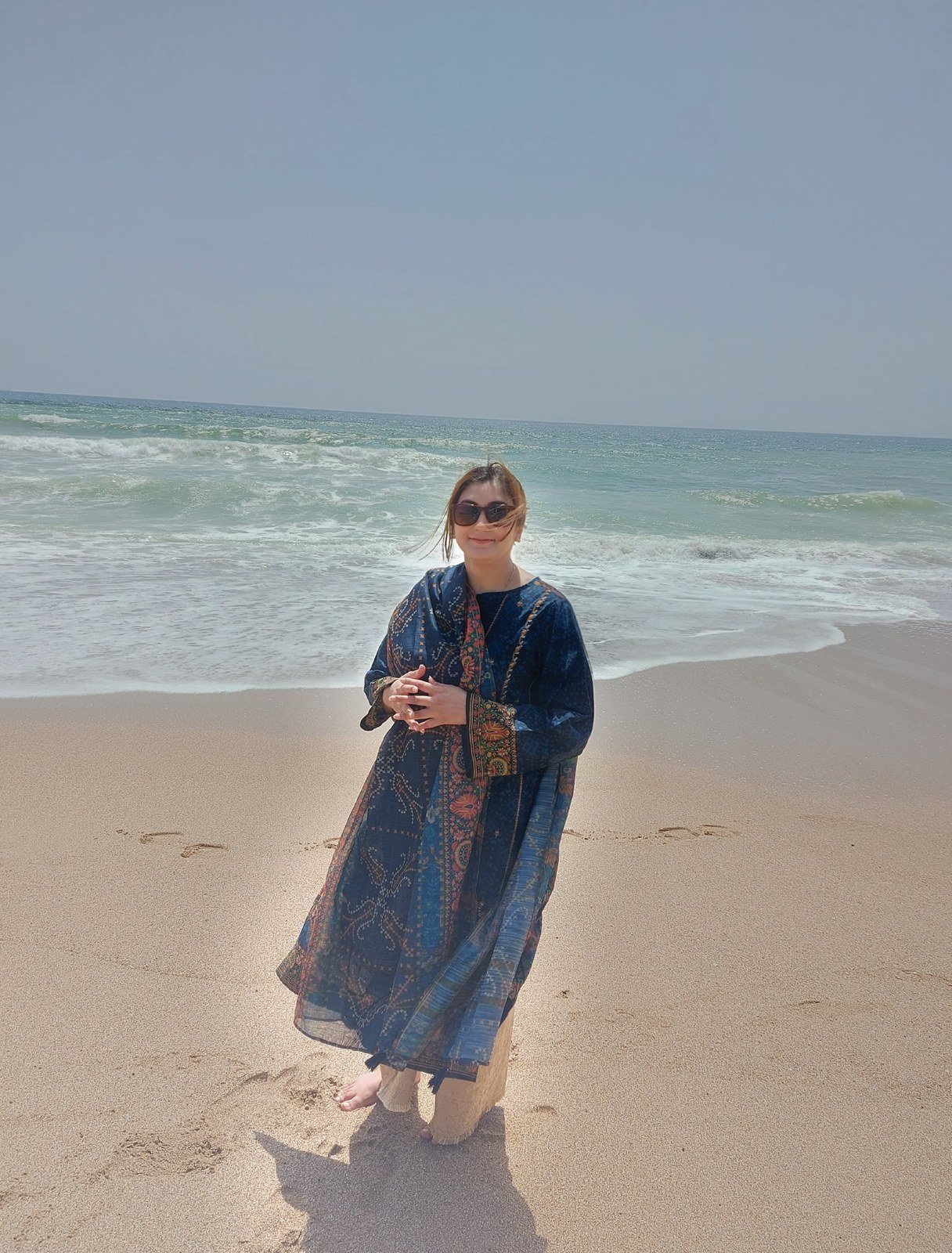
Sana sent William a single photograph from a beach in Karachi — standing at the edge of the surf, sunglasses on, hands clasped quietly in front of her, the ocean rolling in behind. It wasn't posed so much as caught: a private moment, a woman alone with her own thoughts.

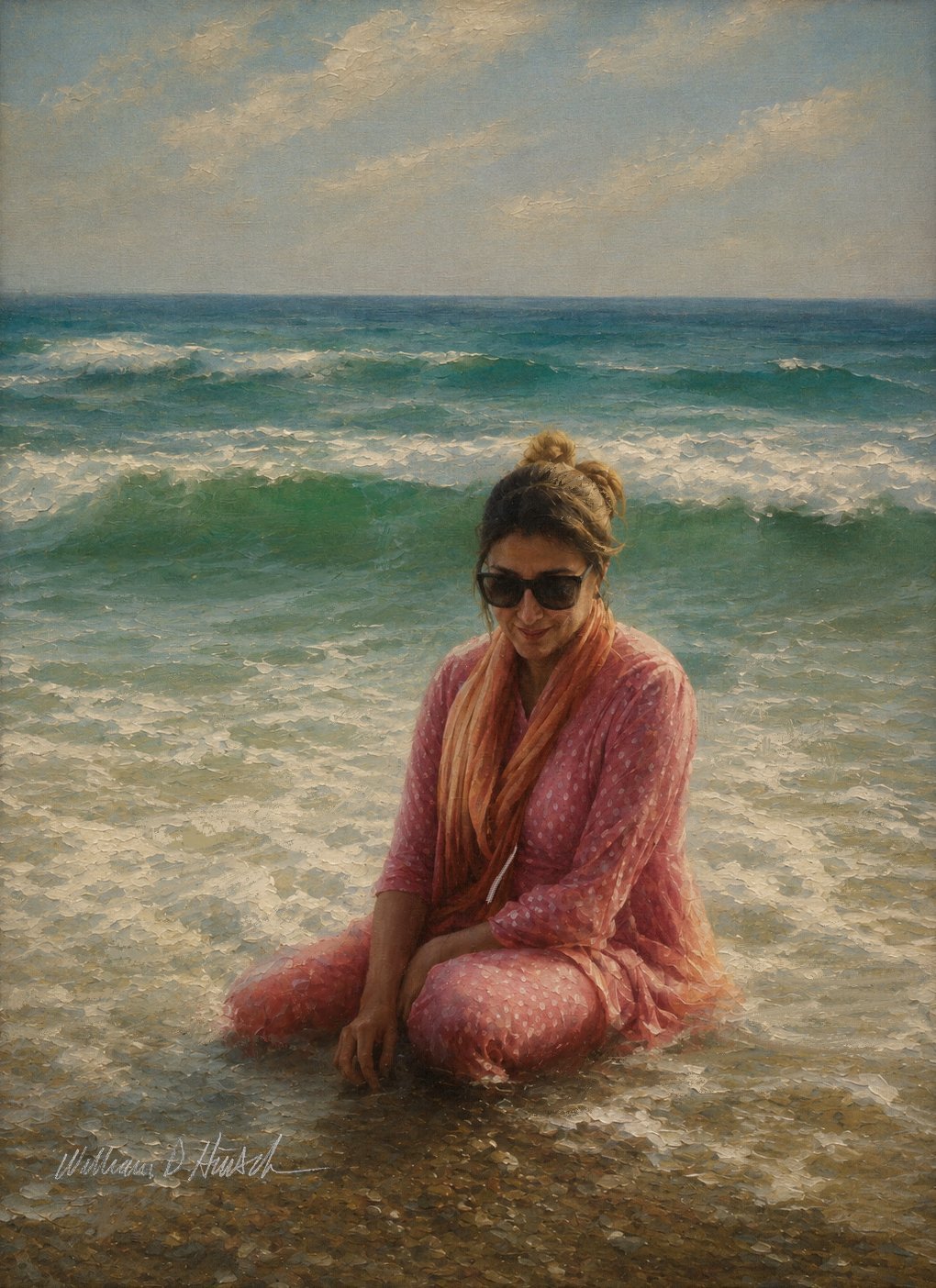
William didn't try to open that privacy up. He kept the sunglasses, the inward and unreadable gaze, the sense of someone fully in her own head — and brought her down into the water itself, kneeling where the waves could reach her, the vast ocean behind her saying more about her state of mind than any expression could.

Some portraits ask a person to open up to the camera. This one lets her stay exactly as private as she was that day — and somehow says more for it.

Sana standing at the edge of the surf in Karachi, the original reference photograph

The original reference photo, Karachi beach

Sana on Karachi Beach, the final painting, kneeling in the surf

The final painting — the same privacy, a different stillness

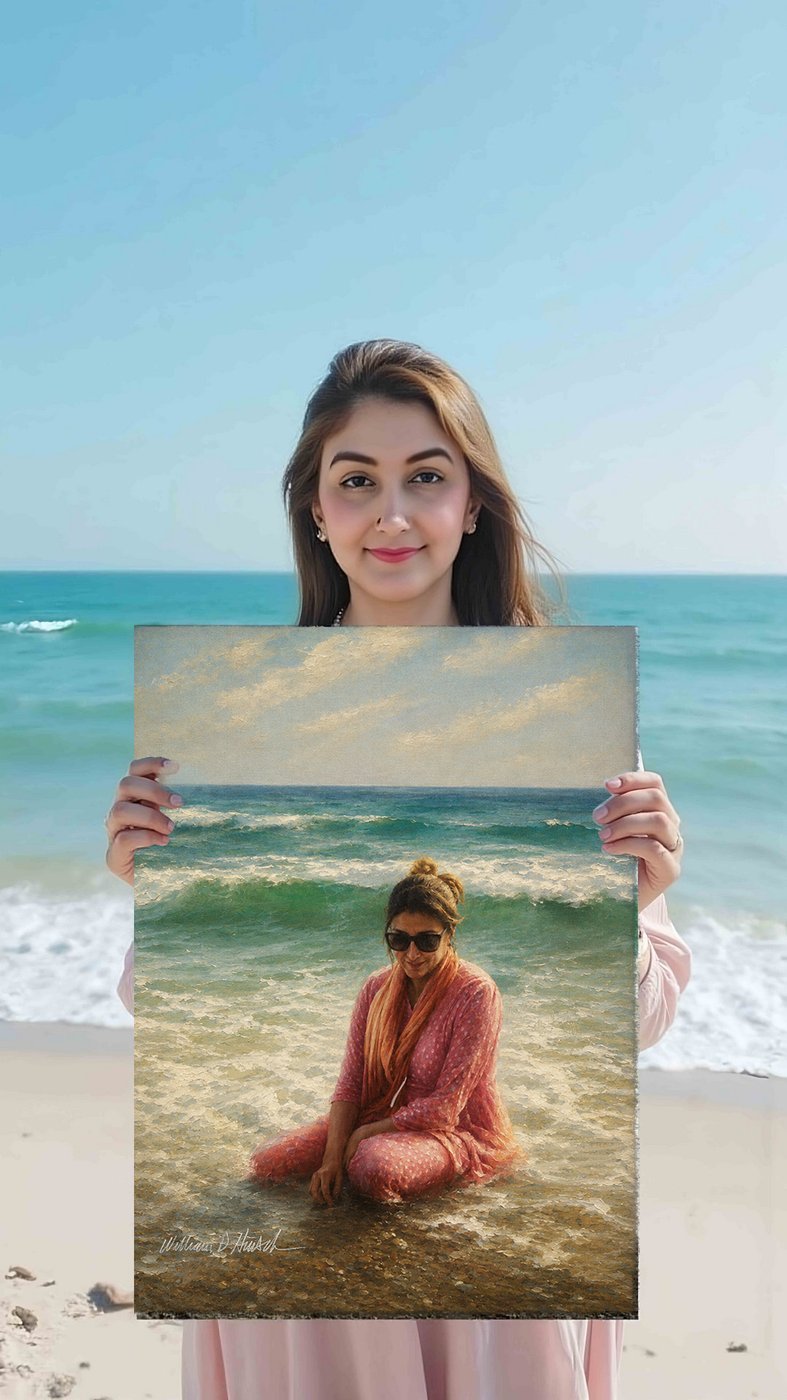
Sana holding the finished painting on Karachi Beach, the same location the painting depicts

The finished painting, returned to Karachi Beach where the moment happened

Suzy and Her Mother

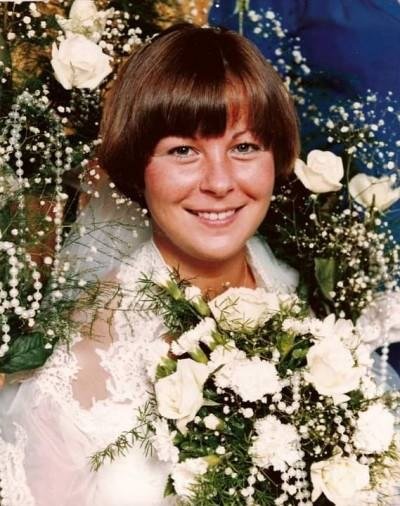
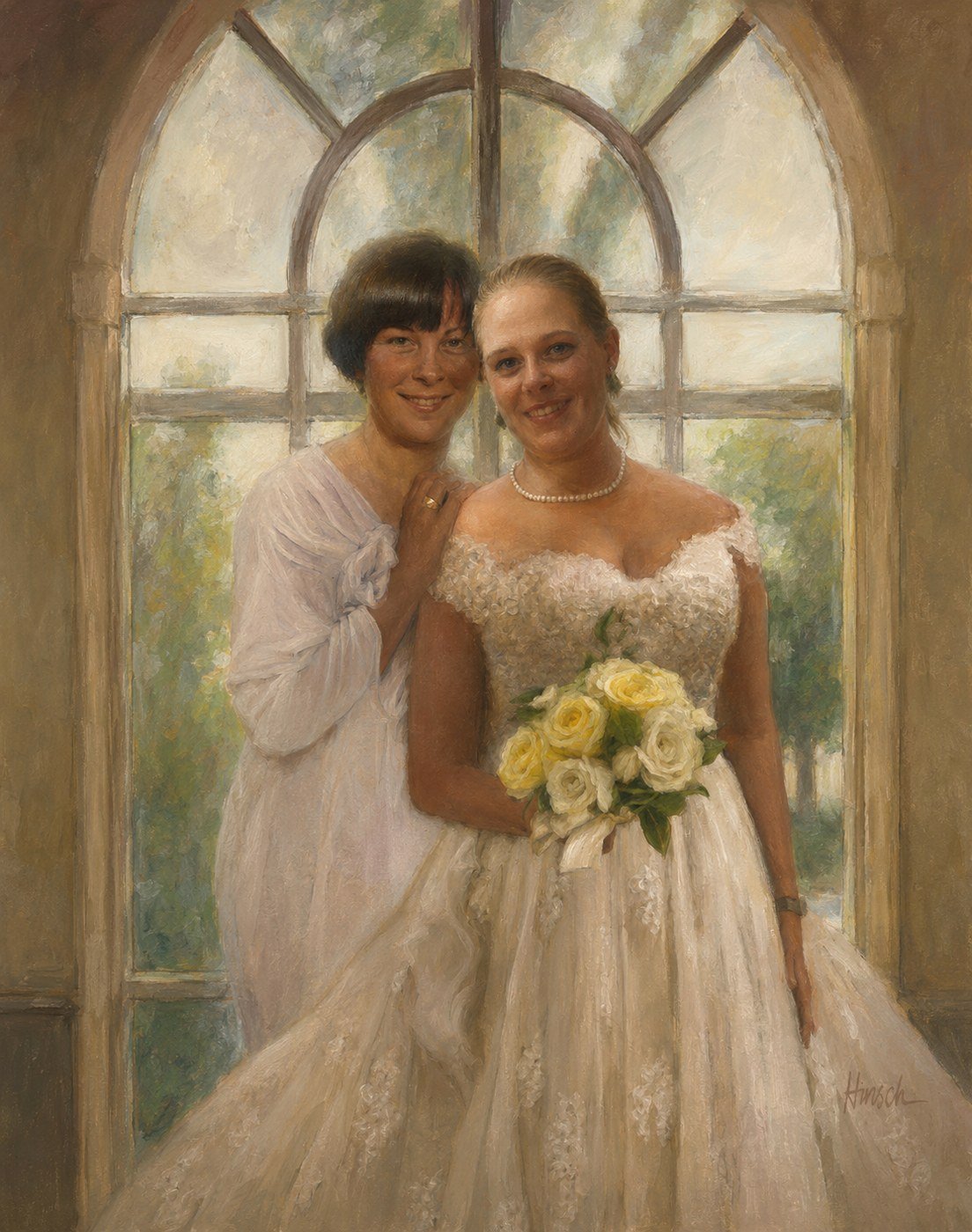
Suzy's mother passed away before the wedding. The only photograph the family had of her in a wedding dress was her own, taken decades earlier — a different dress, a different era, a different room entirely.

William brought her into the frame beside her daughter, on the one day a mother is supposed to be standing closest. Not as a ghost in the background, but present, warm, her hand on Suzy's shoulder, the two of them leaning into each other exactly as they would have.

The wedding photographs show Suzy alone. The painting shows the day the way it should have felt.

Suzy's mother on her own wedding day, decades earlier — the only reference photo available

Suzy's mother, on her own wedding day, decades earlier

The final painting, Suzy and her mother together on Suzy's wedding day

The final painting — mother and daughter, together, on Suzy's wedding day

John Bovis, Esq.

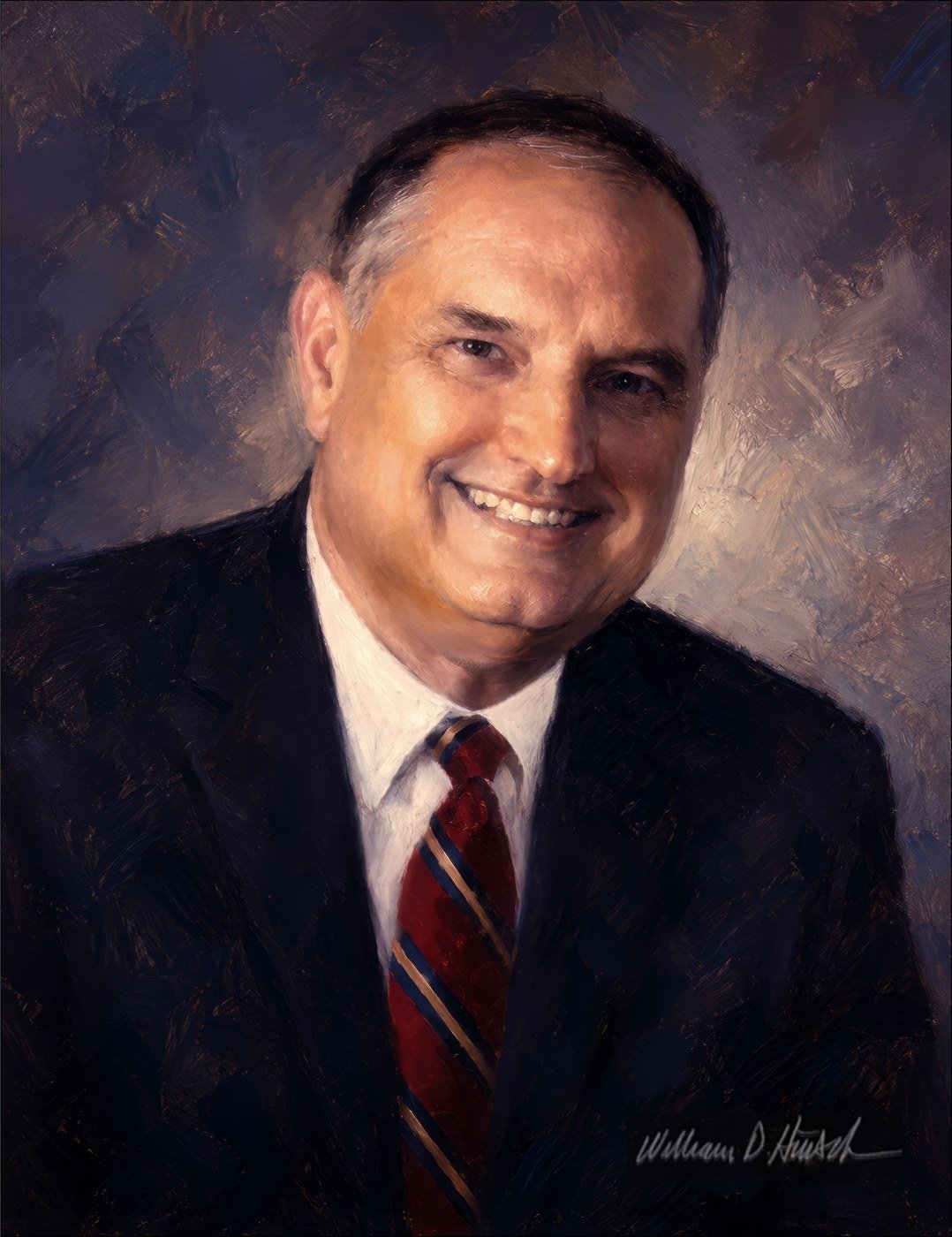
After John Bovis passed, his colleagues wanted a portrait worthy of the office wall he'd occupied for decades — something with the weight and dignity of the tribute portraits that hang in law firms and courthouses everywhere. What they had were two ordinary photographs: a headshot from the firm directory, and a candid taken at his desk, papers in hand.

Neither photo had the presence the moment called for. William combined the honest likeness from both — the set of his smile, the directness of his gaze — and placed him against a formal, painterly backdrop built for the wall he now watches over.

A tribute portrait isn't meant to document a day. It's meant to hold up a lifetime of respect, every time someone walks past it.

John Bovis, candid reference photo at his desk

Candid photo at his desk

John Bovis, firm directory headshot reference photo

Firm directory headshot

The final tribute painting of John Bovis, Esq., combining both reference photographs into one formal portrait

The final tribute portrait, painted for his office wall

Chloe

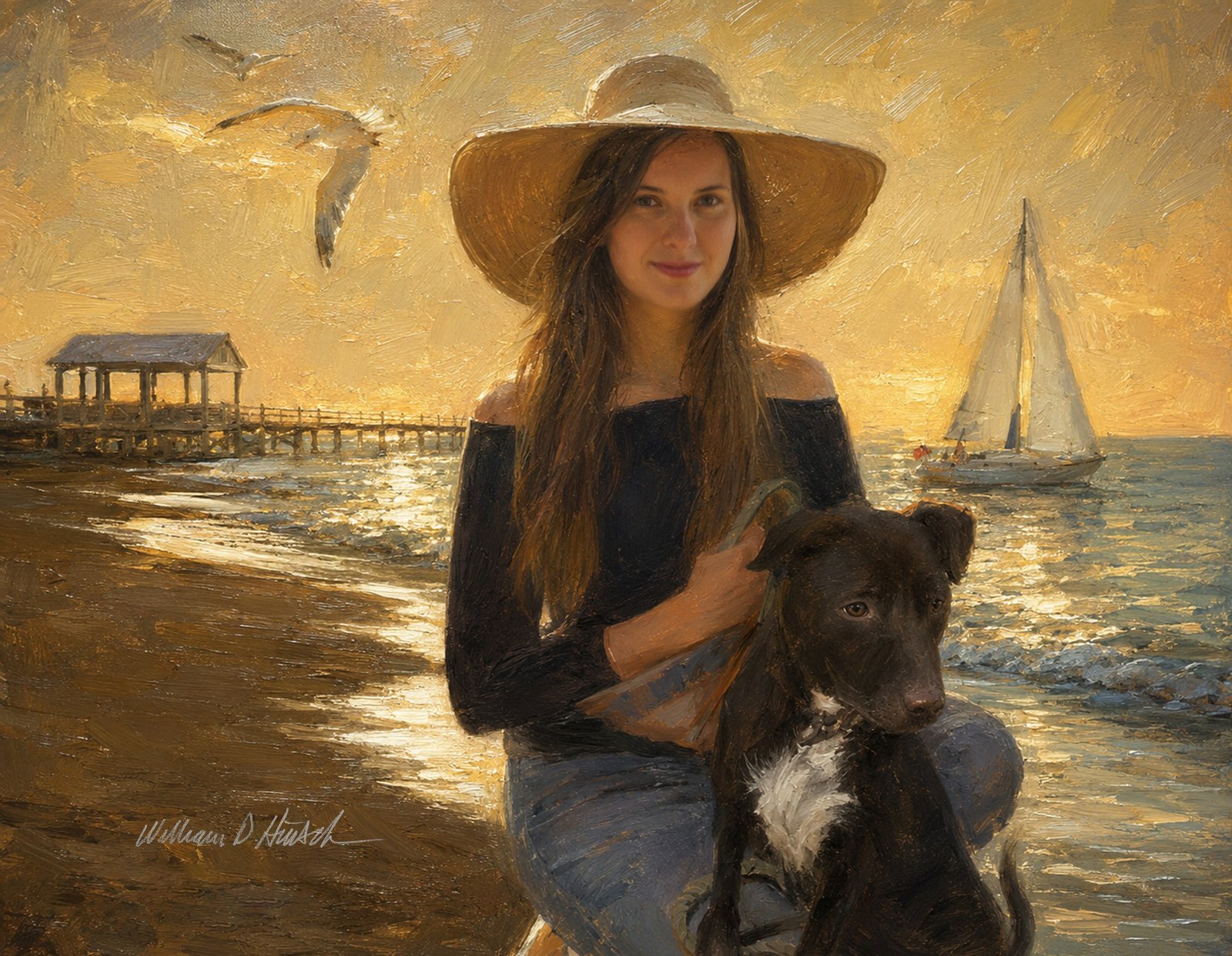
Chloe died by suicide at twenty-two. Her best friend commissioned this painting afterward — not for herself, but as a gift for Chloe's parents, so there would be one more way to see her exactly as her friends did: sun-warmed, at the beach, her dog held close, completely herself.

William painted her in the golden last light of a summer evening, the kind of ordinary, radiant moment that never makes it into a eulogy but is somehow the truest way to remember someone.

Grief doesn't need a portrait to explain what happened. It needs one to remember who she was.

Chloe, painted portrait of a young woman with her dog on a North Carolina beach at sunset, commissioned as a gift for her parents

Chloe, painted as a gift from her best friend to her parents

Tommy and Janelle

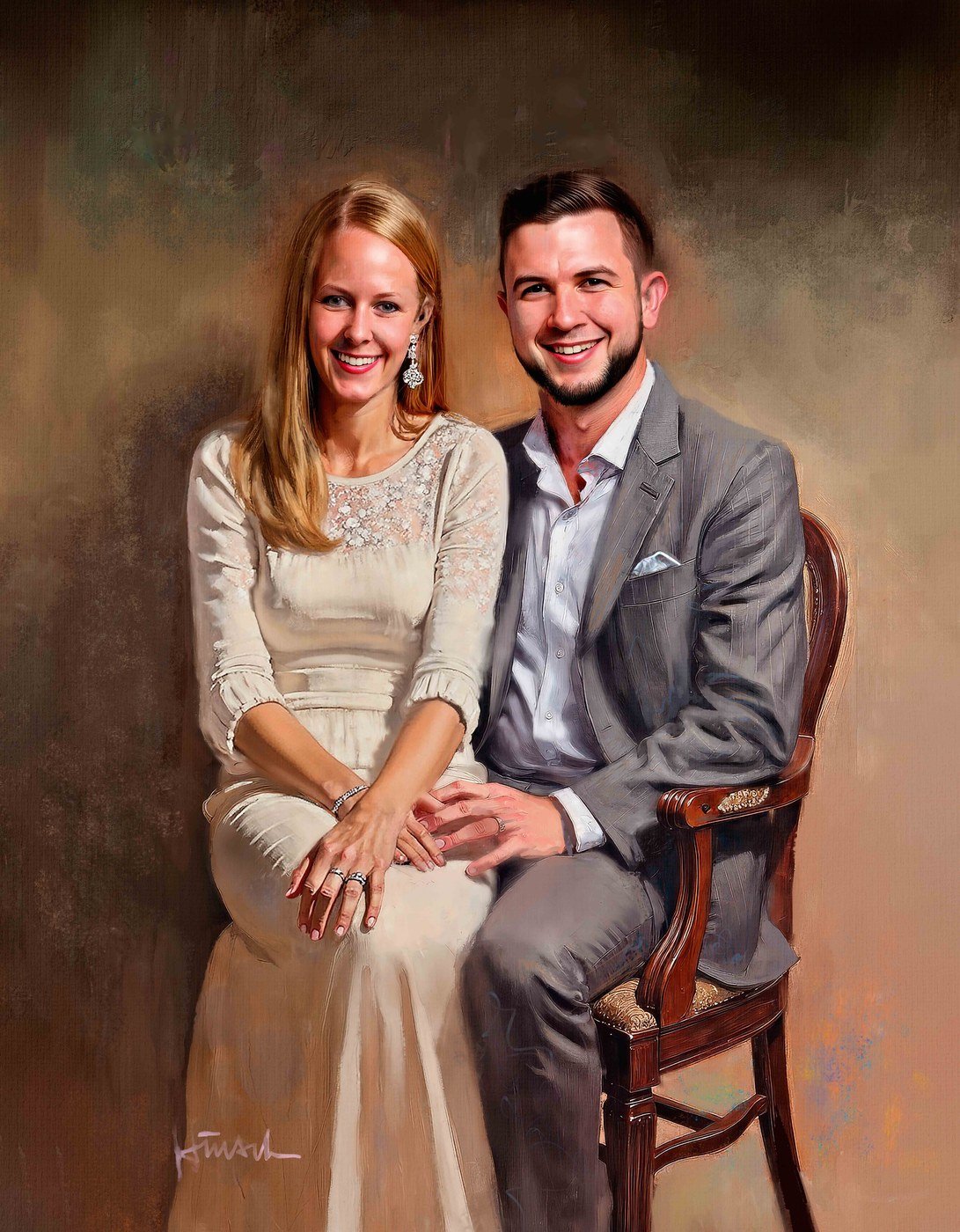
Tommy died in a car accident, leaving his wife Janelle a widow far too early. It was her father who came to William — not for himself, but for his daughter. He wanted her to have something more lasting than the wedding photographs: a painted portrait of the two of them exactly as they looked that day, radiant and certain of everything ahead of them.

There's a particular kind of love in a father-in-law's grief — missing the son he'd gained, and aching for the daughter now carrying that loss. The painting became a way to hold both at once.

Some gifts are for the person receiving them. This one was for a father who couldn't fix his daughter's grief, but could make sure she'd always have this to look at.

Tommy and Janelle, formal wedding day portrait commissioned by Janelle's father in memory of Tommy

Tommy and Janelle, commissioned by her father as a gift after Tommy's passing

Victoria and Ted

When Victoria and Ted got married, his parents had already been gone for years. There was no photograph of the four of them together, and there never would be — but that didn't mean they had to be left out of the family the wedding created.

William brought his mother and father into the garden beside them, a hand on Ted's shoulder, present the way parents are at a wedding: proud, close, unmistakably there.

A wedding portrait usually marks who was in the room. This one marks who mattered — whether or not they could be.

Victoria and Ted's wedding portrait, painted together with Ted's parents who had passed years earlier

Victoria and Ted, painted together with his parents, gone years before the wedding

Wilma and the Dimes

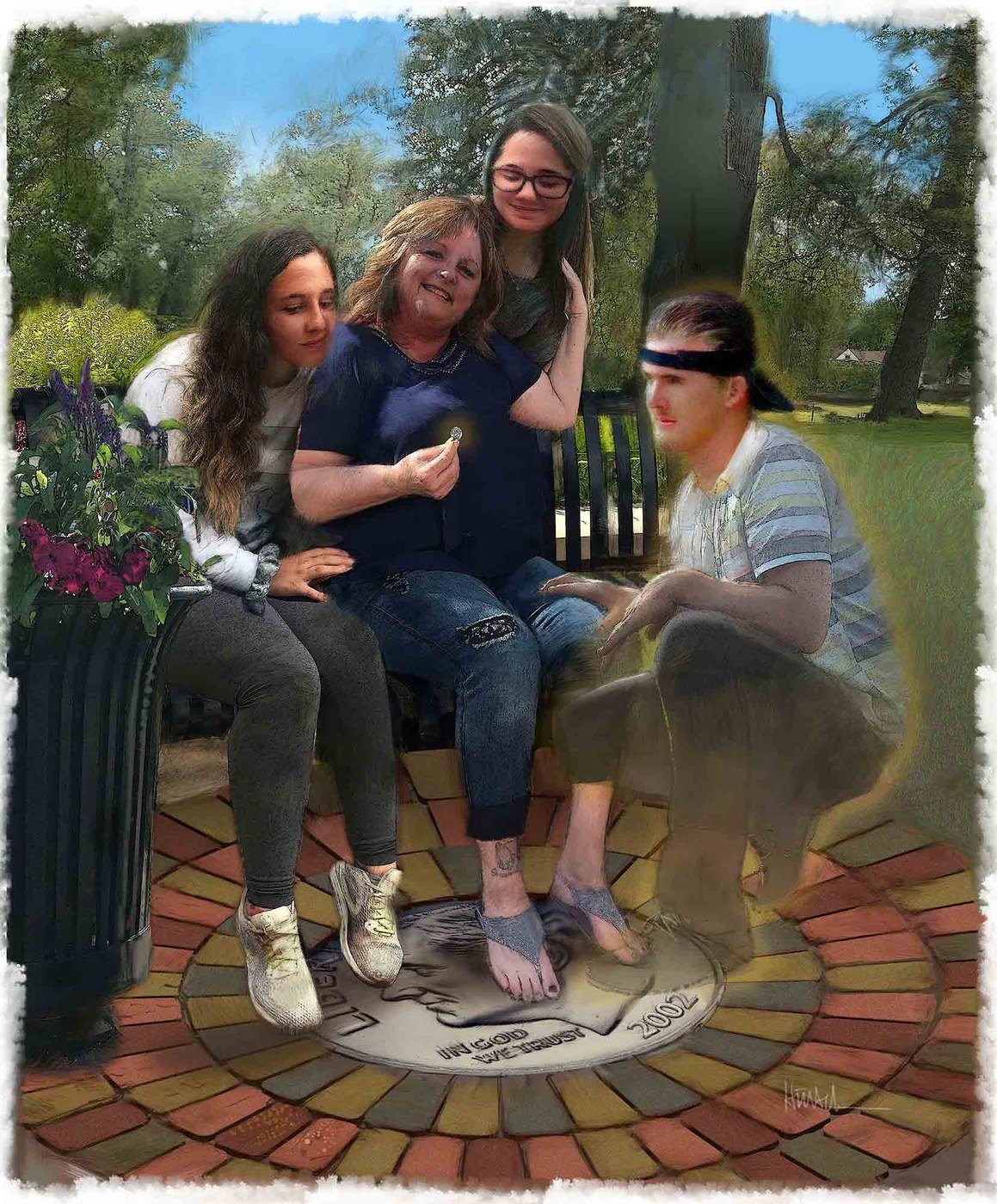
After Wilma's son died young, the dimes started showing up. Not in pockets or under couch cushions, but in strange, specific places — on a windowsill, in the middle of an empty parking spot, at the exact moment someone in the family needed a sign. It happened too often, in too many unlikely places, for anyone in the family to call it coincidence. They came to believe it was him, letting them know he was still close.

Years later, Wilma's daughter commissioned this painting — her mother with her granddaughters, and him, present again, kneeling at her feet the way he used to. A single dime glows beneath her, and another rests in her open hand.

A photograph could never hold what the dimes meant to this family. A painting could — because everyone who sees it already knows exactly what it's telling them.

Wilma with her granddaughters and the translucent presence of her late son, a glowing dime beneath her feet symbolizing signs the family believed came from him

Wilma, her granddaughters, and the son the family believes still finds ways to reach them

Maura Binkley

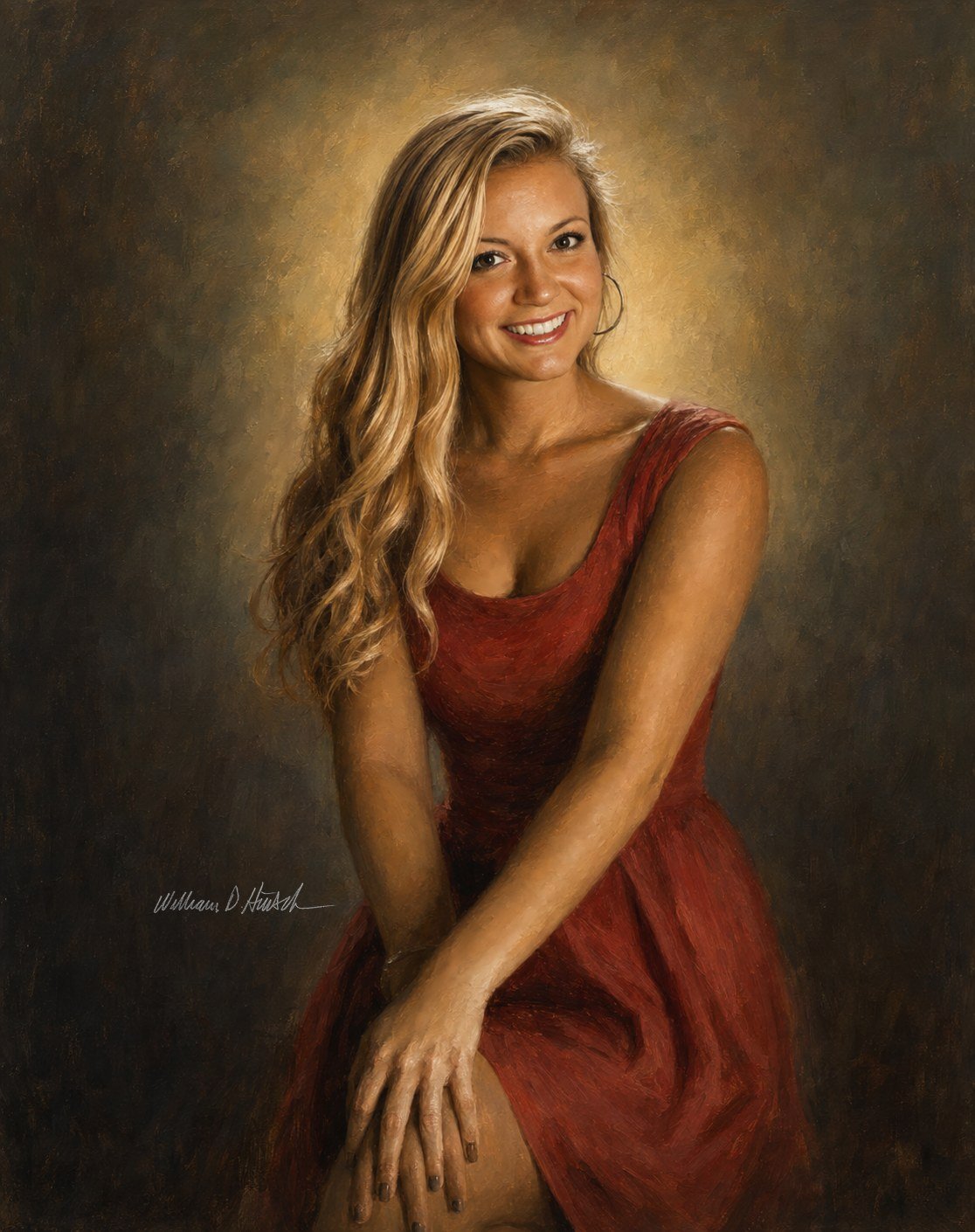
Maura's mother reached out to William through PatronArt about a year after the tragedy that took her daughter's life. She told him who Maura really was: a sweet young woman who never gave anyone trouble, whose beauty showed on the inside as much as the outside, and who was, by every account, a force for good among her friends, her family, and the wider world she touched.

Maura died in November 2018, one of the innocent lives lost in the shooting at Hot Yoga Tallahassee. Her mother shared the story through tears — but also through pride, describing a daughter who was fun-loving, smart, and sassy, someone whose spirit deserved to be remembered as fully as her loss was mourned.

William chose to paint something both traditional and unmistakably her: a classic portrait grounding the piece, with her wilder side carried through symbolism — a red dress fitted beautifully to her, an expectant, forward-looking pose, and a soft aura of gold surrounding her throughout the canvas.

A portrait like this isn't only a memorial to what was lost. It's a portrait of exactly who she was — sweet, sassy, and impossible to forget.

Maura Binkley, memorial portrait by William Dean Hinsch, painted in a red dress with a golden aura

Maura Binkley, painted for her family in memory of who she was

A portrait doesn't copy a photograph. It interprets a life.

Whether it's a family gathered across generations, a beloved pet, or a tribute to someone no longer with us — every piece begins with a conversation.

Commissioning a Portrait Painting guide cover

Free Guide

Commissioning a Portrait Painting

Learn how to choose the right artist and communicate your vision — delivered straight to your inbox.

We'll never share your email. Unsubscribe anytime.

Check Your Inbox

Your free guide is on its way to your email. If you don't see it in a few minutes, check your spam folder.